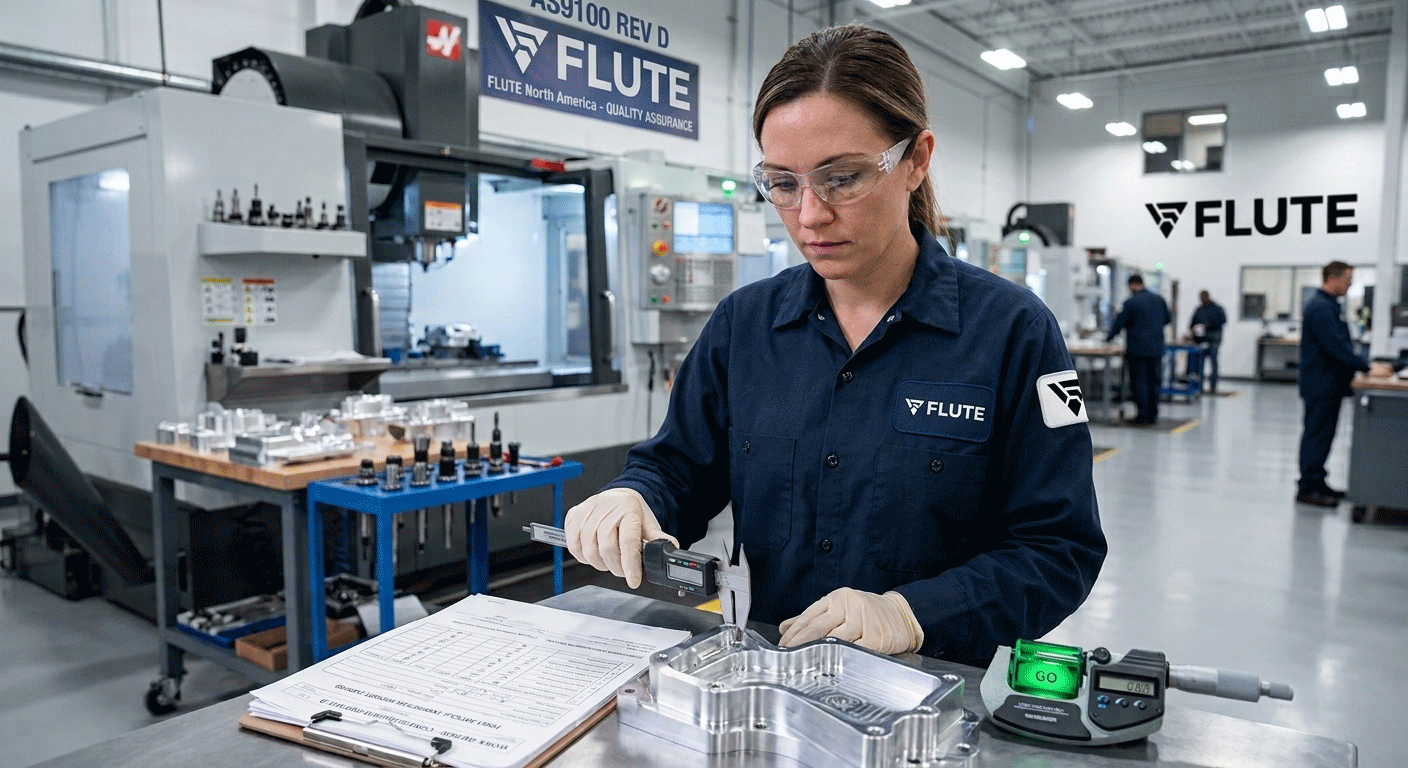
.png)
The 6 Best CNC Machining Services for Defense and ITAR-Regulated Programs (2026)

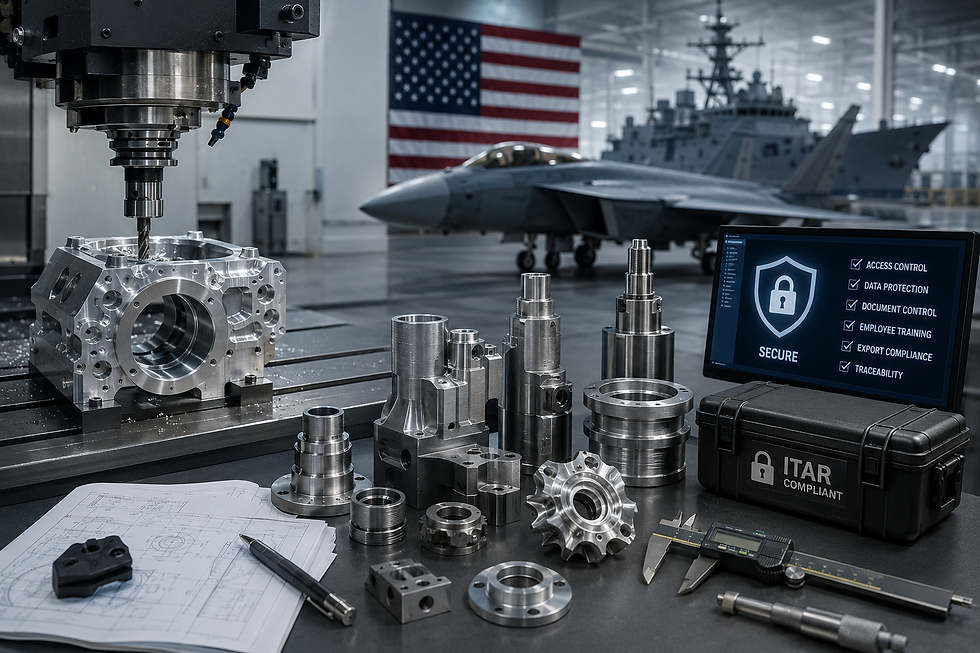
Defense manufacturing requires far more than precision machining.
Companies supporting military, aerospace, and government programs must meet strict security, documentation, traceability, and export-control requirements. In the United States, these requirements are primarily governed by the International Traffic in Arms Regulations (ITAR), which control the manufacturing and handling of defense-related products and technical data.
Selecting an ITAR-compliant manufacturing partner is essential for organizations producing components for:
Military vehicles
Defense electronics
UAVs and drones
Satellite systems
Weapons support equipment
Aerospace defense programs
Naval and maritime systems
In 2026, companies increasingly seek CNC suppliers that combine advanced manufacturing capabilities with rigorous compliance standards, secure processes, and cross-border operational flexibility.
This guide explores the six most valuable CNC machining services for defense and ITAR-regulated programs.
Why ITAR Compliance Matters in CNC Manufacturing
ITAR regulations are designed to protect sensitive defense technologies and prevent unauthorized access to controlled information.
An ITAR-compliant machine shop typically implements:
Controlled access to technical documentation
Secure data management systems
Employee training on export regulations
Traceability throughout the manufacturing process
Material certification and documentation controls
Strict customer confidentiality procedures
For defense contractors, working with ITAR-compliant suppliers reduces regulatory risk while ensuring products meet government and military requirements.
1. Precision 5-Axis CNC Machining
Modern defense systems require increasingly complex geometries that cannot be efficiently manufactured using conventional methods.
5-axis CNC machining enables:
Complex aerospace structures
Lightweight defense components
Multi-surface machining in a single setup
Reduced production time
Improved dimensional accuracy
Lower risk of human error
Applications include:
Defense Applications
UAV structural components
Missile system parts
Radar assemblies
Satellite mechanisms
Military communication equipment
Aircraft engine components
The ability to maintain extremely tight tolerances is critical for mission-critical systems where performance and reliability are non-negotiable.
2. CNC Turning for High-Precision Defense Components
Many military and aerospace products depend on rotational parts manufactured with exceptional precision.
Advanced CNC turning services support:
Shafts
Bushings
Connectors
Hydraulic components
Valve systems
Defense fasteners
Sensor housings
Modern multi-axis turning centers reduce setup times while maintaining the consistency required for defense programs.
The combination of precision turning and ITAR compliance helps ensure secure production from prototype through full-scale manufacturing.
3. Prototyping and Low-Volume Defense Production
Defense projects frequently involve:
Research and development
Qualification programs
Prototype validation
Engineering changes
Pilot production runs
Unlike mass-market industries, military programs often require flexible manufacturing partners capable of producing low quantities while maintaining full documentation and traceability.
Key advantages include:
Faster Development Cycles
Rapid prototyping allows defense contractors to:
Validate designs earlier
Reduce development risks
Accelerate testing phases
Improve engineering collaboration
Minimize costly redesigns
Manufacturers that combine rapid response times with ITAR-compliant processes provide significant advantages for modern defense programs.
4. Machining Exotic Metals and Defense-Grade Materials
Defense applications frequently use materials that offer superior strength, corrosion resistance, and thermal performance.
Common defense materials include:
Titanium Alloys
Widely used in:
Aerospace structures
Missile systems
UAV components
Military aircraft assemblies
Inconel
Ideal for:
High-temperature environments
Turbine components
Propulsion systems
Defense engine applications
Stainless Steel
Commonly utilized for:
Naval systems
Medical-defense equipment
Structural components
Communication systems
Aluminum Aerospace Grades
Popular for:
Lightweight military assemblies
Electronic housings
Aircraft components
Defense vehicle systems
Machining these materials requires specialized tooling, process controls, and extensive manufacturing expertise.
5. Full Traceability and Quality Documentation
One of the most important services in defense manufacturing is comprehensive quality control and documentation management.
Defense contractors often require:
Material Certifications
Every raw material must be traceable back to its source.
Inspection Reports
Critical dimensions require documented verification.
First Article Inspection (FAI)
FAI processes validate that components meet all engineering requirements before production begins.
Lot Traceability
Complete manufacturing records help ensure regulatory compliance and simplify audits.
Controlled Technical Data Management
Secure handling of drawings and specifications is fundamental for ITAR-regulated programs.
Manufacturers that provide robust quality systems help reduce risk across the entire supply chain.
6. Nearshore ITAR-Compliant Manufacturing Solutions
The shift toward nearshore manufacturing continues to reshape North American defense supply chains.
Companies increasingly seek manufacturing partners that offer:
Geographic proximity to the United States
Reduced lead times
Lower logistics costs
Improved communication
Supply chain resilience
Enhanced quality oversight
For organizations operating under ITAR requirements, a secure binational manufacturing model can provide the advantages of nearshore production while maintaining strict compliance standards.
This approach helps defense contractors respond more quickly to changing program demands without sacrificing quality or regulatory requirements.
How to Choose an ITAR-Compliant CNC Machining Partner
When evaluating suppliers for defense programs, companies should consider several critical factors.
ITAR Registration and Compliance Procedures
Manufacturers should demonstrate robust systems for handling controlled technical information and sensitive defense projects.
Quality Certifications
Look for partners with internationally recognized certifications, such as:
ISO 9001
AS9100
Industry-specific quality standards
Advanced Manufacturing Capabilities
A qualified defense supplier should offer:
3-axis CNC machining
5-axis machining
CNC turning
Prototype manufacturing
Production scaling capabilities
Material Expertise
Experience with aerospace and defense-grade materials is essential for achieving reliable performance.
Documentation and Traceability Systems
Comprehensive records reduce compliance risks and support government requirements.
The Future of Defense CNC Manufacturing in 2026
Several trends are shaping the future of ITAR-compliant manufacturing:
Digital Manufacturing Integration
Advanced production monitoring improves quality and traceability.
Increased Supply Chain Localization
Defense organizations continue reducing overseas dependencies through nearshore solutions.
Greater Demand for Precision Components
Emerging technologies require increasingly complex and lightweight designs.
Stronger Regulatory Oversight
Manufacturers must continuously improve security protocols and documentation systems to maintain compliance.
Companies that invest in both advanced machining capabilities and robust ITAR procedures will remain essential partners in the defense industry.
Conclusion
Defense programs require manufacturing partners capable of delivering more than dimensional accuracy.
The best CNC machining services for ITAR-regulated projects combine:
Precision machining expertise
Advanced manufacturing technologies
Full traceability
Secure data handling
Quality certifications
Reliable nearshore supply chains
Whether producing prototypes, aerospace assemblies, or mission-critical defense components, choosing an ITAR-compliant CNC supplier is fundamental to achieving regulatory compliance and operational success.
Organizations that prioritize security, quality, and manufacturing excellence will be better positioned to support the evolving demands of the defense sector in 2026.
Frequently Asked Questions (FAQ)
What does ITAR mean in CNC manufacturing?
ITAR stands for International Traffic in Arms Regulations, which govern the production, handling, and export of defense-related products and technical data in the United States.
Why is ITAR compliance important for defense suppliers?
ITAR compliance ensures sensitive military information and technologies are protected and handled according to federal regulations.
Can CNC machine shops in Mexico support ITAR programs?
Yes, provided they operate under approved compliance frameworks, secure processes, and meet all applicable ITAR requirements established by their customers and U.S. regulations.
What materials are commonly used in defense CNC machining?
Titanium, Inconel, stainless steel, aluminum aerospace grades, and other high-performance alloys are frequently used in military applications.
What certifications should defense manufacturers have?
ISO 9001, AS9100, and ITAR registration are among the most important credentials for aerospace and defense manufacturing partners.
Looking for an ITAR-Compliant CNC Manufacturing Partner?
FLUTE Manufacturing provides precision CNC machining solutions for aerospace, defense, and high-regulation industries, combining advanced manufacturing capabilities, rigorous quality systems, and secure handling procedures for sensitive projects.
Contact our team today to discuss your defense manufacturing requirements.